

From Idealist to Pragmatist
Changing Perspectives

There is a stage in many intellectual lives where idealism reigns supreme. In youth especially, the mind burns with the desire to discover the ultimate truth of things. One wants clarity, coherence, and answers. Philosophy appears as a ladder that might lead us out of confusion and into a final understanding of reality.
At that stage, the world feels like a puzzle waiting to be solved.
Idealism grows naturally from this impulse. We begin to suspect that beneath the surface of appearances there must be a deeper order - a perfect logic, a metaphysical structure, a final explanation that, if discovered, would make sense of everything. Philosophy becomes a search for that hidden foundation. Religion promises it. Metaphysics promises it. Even science sometimes appears to promise it.
The idealist believes that somewhere there must be a system that explains the whole.
But life has a way of complicating such hopes.
The years pass. Experience accumulates. One begins to notice that every system leaves something out. Every theory explains some things well but struggles with others. The world resists neat conceptual containment.
Even the greatest thinkers disagree.
One philosopher claims that reality is mind. Another that it is matter. Another that it is process. Another that it is language. Each position has its elegance, its arguments, its internal coherence - and yet none seems capable of closing the question once and for all.
Gradually a quiet suspicion emerges.
Perhaps the task of philosophy is not to solve reality.
Perhaps it is to help us live within it.
This is where pragmatism begins to enter the picture.
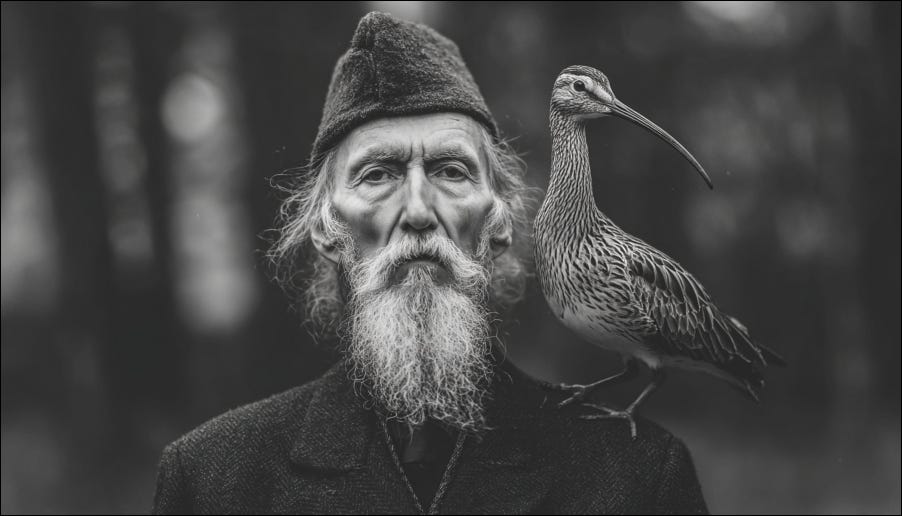
Pragmatism does not necessarily reject the insights of idealism. Rather, it changes the orientation of thought. Instead of asking, What is the final structure of reality, the pragmatist asks a different question:
What helps us navigate experience well?
Truth becomes less like a distant treasure buried beneath the universe and more like a tool that helps us move through the world. Ideas are not valuable only because they are logically perfect. They are valuable because they illuminate experience, guide action, deepen understanding, and open new possibilities for living.
In this way, pragmatism is not a retreat from philosophy but a maturation of it.
It acknowledges something that long reflection eventually reveals: reality is inexhaustible. No system can fully capture it. Every conceptual framework is partial, provisional, and revisable.
But this does not make thought meaningless.
Quite the opposite.
Thought becomes an instrument of participation rather than domination. Instead of trying to master reality from above, we learn to engage with it from within.
The shift from idealism to pragmatism therefore reflects a deeper philosophical humility.
The idealist often imagines that philosophy will culminate in a final view - a completed map of existence. The pragmatist suspects that philosophy is more like a set of evolving maps, each drawn from a particular vantage point, each useful for certain journeys but none able to represent the whole terrain.
And perhaps this is not a failure.
Perhaps it is simply the nature of being alive within a world that is richer than any theory.
When we adopt a pragmatic attitude, we become less obsessed with winning metaphysical debates and more interested in how ideas shape the quality of lived experience. The question shifts from Which system is absolutely correct? to Which perspective helps us see more clearly, act more wisely, and live more fully?
In this way philosophy returns to its original task.
Not the construction of intellectual monuments, but the cultivation of wisdom.
The pragmatist still values truth, still seeks understanding, still engages deeply with philosophical traditions. But there is less anxiety about finding the final answer. Instead there is a growing appreciation for the process of inquiry itself.
Ideas become companions in the journey rather than final destinations.
And perhaps this is where philosophy finally comes home - to the lived world from which it began.
The mountains, the conversations, the books on the shelf, the quiet moments of reflection, the unexpected insights that arrive while walking or writing. These experiences resist complete explanation, yet they are precisely where meaning emerges.
The idealist sought the ultimate theory.
The pragmatist discovers that the world itself is already enough to think with.
And that may be the most liberating realisation of all.
This is a beautifully articulated reflection. The movement you describe — from the youthful desire for a final philosophical system to the quieter recognition that thought is a way of participating in reality rather than mastering it — feels deeply true to the lived experience of philosophy.
What especially resonated with me was the idea that philosophy matures when it shifts from trying to solve reality to helping us live within it. That feels less like a retreat from philosophy and more like its fulfillment.
In the end, the most meaningful insights often arrive not in grand theoretical systems but in the ordinary places where reflection meets life: books, conversations, and quiet moments of thought — sometimes even while walking.
Thank you for such a thoughtful piece.