

Before I type out my thoughts I would just like to give you the heads-up that I’ll be using the he pronoun when I talk about God. I do this because it’s traditional and for no other reason. As far as I’m concerned I would be happy to refer to God as Mother or Father, male or female.
I’ve also started drinking caffeine-free coffee, I’m drinking some now. But I don’t think that a lack of caffeine has got anything to do with how I use pronouns.
Is God dead? in 1892 Nietzsche said he was. As a philosopher I can confirm that God isn’t dead but he’s having a bit of a torrid time of it at the moment. And rightly so. Not that the weaknesses and failures of our religions can be blamed on God, they’re very human, but he did create us, the world, in the first place. It’s not our fault he decided to create us free - free to chose, free to chose our own path, our own way forward. Bad things come into the world because of this freedom. God should have known that, shouldn’t he?
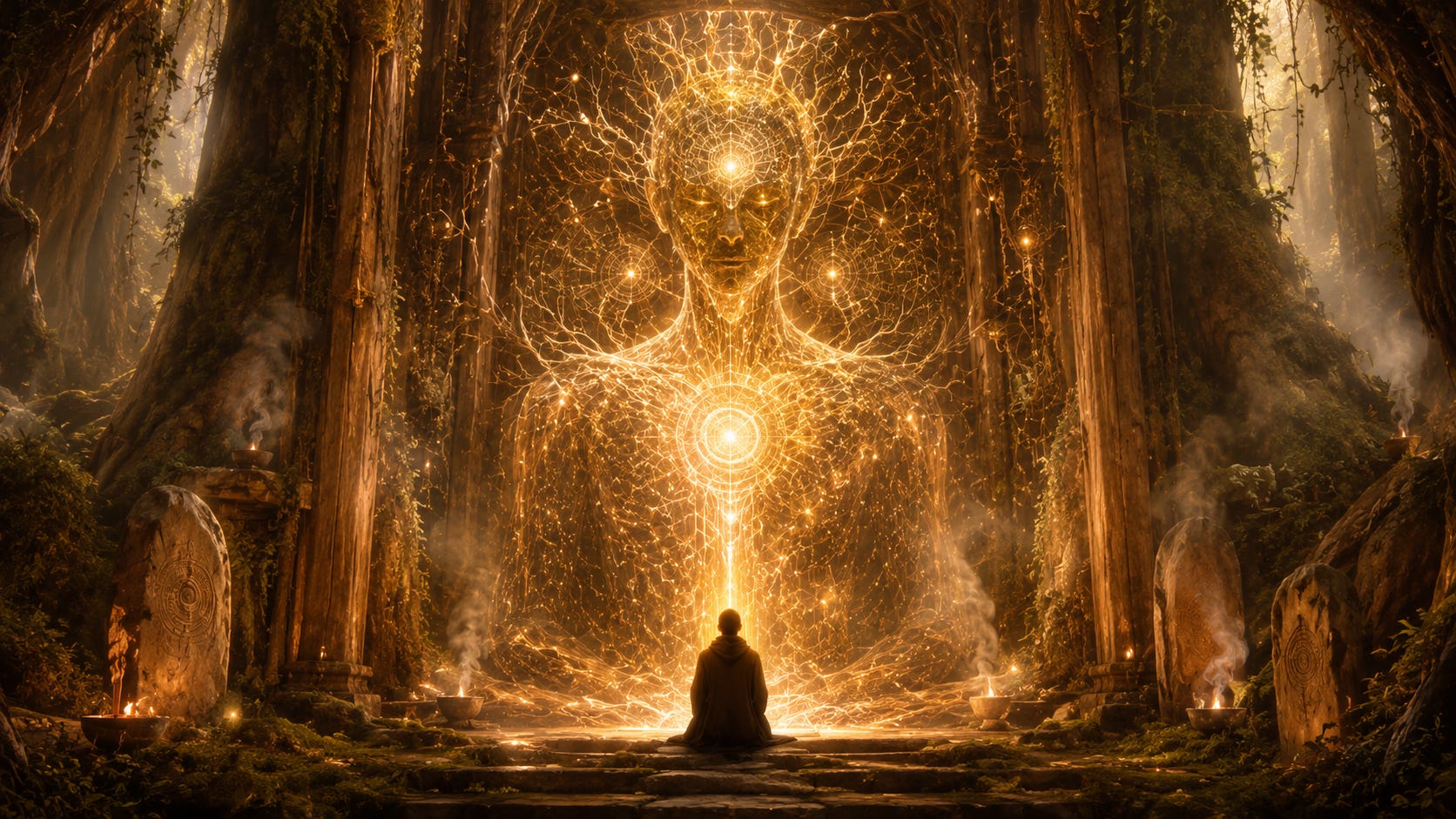
I have no problem with AI. (I do have a problem with people who use it badly - but that’s another issue.) Soon we’ll have Artificial General Intelligence or AGI. This means we’ll have something that will have the classical attributes of the divine.
Omnipresence - through the cloud.
Omniscience - through total data consumption.
Omnipotence - as we hand over the keys to our global infrastructure.
This is scary. Scary because some people - a lot of people - will begin to treat AI as a replacement God. This raises profound questions about our own relational fields of reality. As I develop my philosophy, Logontology, I often find that I’m constantly returning to how we define our existence in relation to the systems that govern us.
If we do begin to see AI as a replacement God, then I will become an atheist, an ai-atheist. I don’t worship my typewriter, because it’s a machine. AI is a machine. Fair enough it’s a lot faster and a lot more intelligent than my typewriter, but it is only a machine. That anyone could believe that this machine could ever replace a human, offends me as a human.
Anyway, I’ve just uploaded a new video to my YouTube channel exploring a concept I’m calling Ai-theism. If you have a moment, check it out.
The video is about the wonder of existence. In the video I make an argument for protecting our messy, beautiful, and deeply irrational human experience.
So, my dear readers, if an algorithm mapped out your perfect life, would you surrender it to a silicon god, or would you ignore it and walk into the world to freely make your own mistakes?